
Pressure washing in Plano, TX
Driveways, patios, walkways, siding and retaining walls — cleaned at the right pressure for the surface, which is the part that matters. Estimates are free.
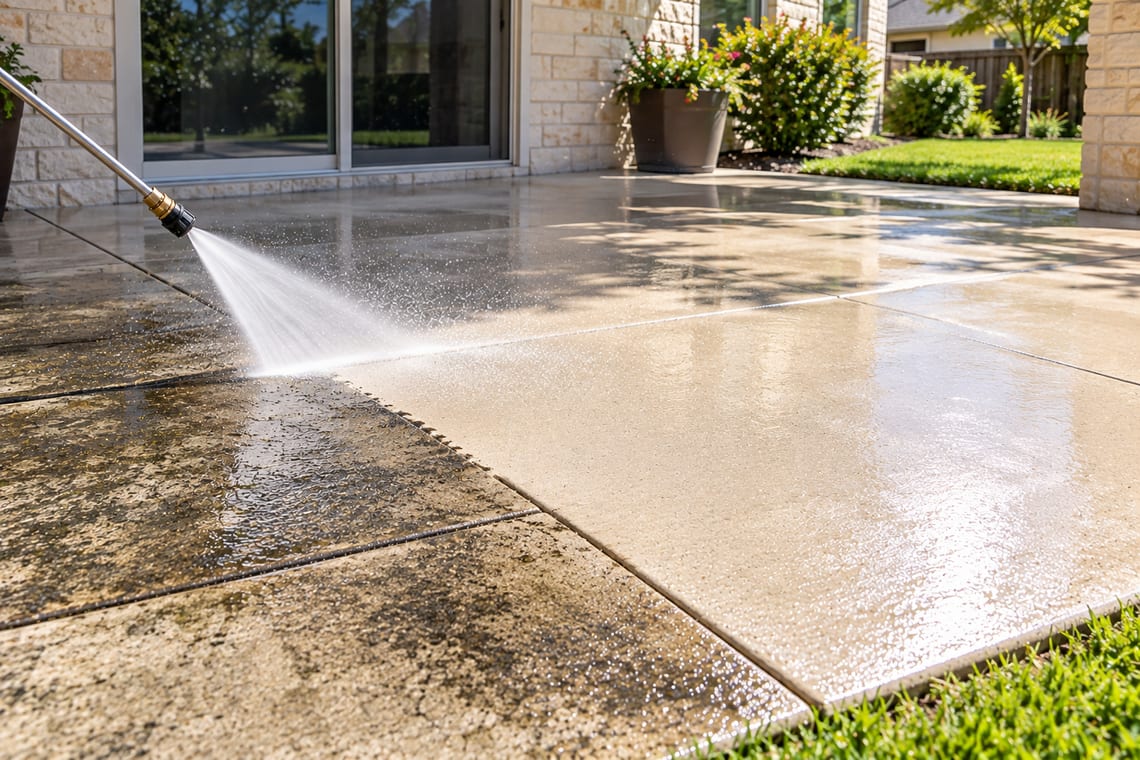
The pressure is not the point
It is the part everyone focuses on, and it is the part that causes the damage. A machine turned up high will take the dirt off almost anything — along with the paint, the top layer of the timber, the mortar between the pavers, and in the wrong hands a stripe of the concrete itself.
Different surfaces want completely different treatment. Concrete will take real pressure. Siding will not. Old mortar and soft brick certainly will not. Getting a good result is mostly about knowing which is which, using the right solution so the chemistry does the work instead of the force, and being patient enough to let it.
That is also why the damage is usually invisible on the day. Water forced up behind lap siding does not announce itself; it shows up months later as a soft patch or a paint failure, long after the person who caused it has been paid.
What we clean
Driveways and concrete
Drives, paths, garage aprons and pool decking. This is where real pressure earns its keep — oil shadows, tyre marks, algae and the general grey that concrete takes on.
Patios and hardscape
Pavers, flagstone and retaining walls, cleaned without blasting out the jointing sand or mortar and creating a bigger job than the one you started with.
House siding and exterior
Low-pressure washing for siding, soffits and fascia, which lifts the green film and dust without driving water where it should not go.
Fences and outbuildings
Cleaning down weathered timber and outbuilding exteriors. Note we clean fences; we do not stain or install them.
What North Texas does to exterior surfaces
Three things drive most of the work here, and each leaves a different mark.
Algae and mildew take hold anywhere that stays damp and shaded — the north side of the house, under trees, the shaded end of a drive. It is the green-black film that makes concrete look permanently dirty, and it is also what makes a wet driveway genuinely slippery. That is a safety issue more than an appearance one.
Hard water from sprinkler overspray leaves chalky mineral deposits on walls, fences and hardscape, exactly as it does on glass. Left long enough it stops rinsing off and starts needing treatment.
Dust and pollen settle into every porous surface through spring and summer, which is why a driveway can look dingy without having a single identifiable stain on it.
George pressure washed my driveway and sidewalk clean. Very good job. I will be using George for all of my window cleaning and other needs from now on.
What we will tell you before we start
- Not every stain comes out. Old oil that has soaked into unsealed concrete, rust bleed from metal furniture, and paint spills have often gone into the surface rather than sitting on it. We will tell you what we expect to achieve before starting, not after.
- Clean concrete is not uniform concrete. Washing removes what is on top; it does not correct patching, staining or colour differences underneath. Sometimes a cleaned drive reveals variation the dirt was hiding.
- Planting gets protected and rinsed. Tell us about anything you care about before we start so it can be covered properly.
- Your windows will need doing afterwards. Washing the outside of a house spots the glass. It is cheaper to have both done in one visit than to book the windows separately a week later.
How often
Most driveways and patios do well on every year or two. Shaded, north-facing or tree-covered concrete grows algae faster and is usually worth doing annually — again, mostly for grip rather than looks.
House siding is generally a longer cycle, every two to three years, unless it sits under trees or takes constant sprinkler spray. The useful signal is not a calendar: it is when the north elevation starts looking noticeably different from the south one.
Common questions
Can pressure washing damage siding?
Yes, done wrong. Too much pressure or the wrong angle forces water behind lap siding, strips paint and can lift older boards. Siding gets low pressure and the right solution instead.
How often should a driveway be cleaned?
Every year or two for most; annually if it is shaded or under trees, because that is where algae grows fastest.
Will it kill my plants?
Planting next to the work is protected and rinsed. Point out anything you are attached to before we start.
Should I have the windows done at the same time?
Usually yes — washing the exterior spots the glass, and one visit costs less than two.
Get a pressure washing estimate
Tell us what needs cleaning — drive, patio, siding, or all of it — and we will give you a price before any work starts.